globalsources

Bulldozer vs Excavator: Understanding the Difference for Qatar Site Work

Bulldozers and excavators are the two most visible machines on large Qatar construction sites. To an untrained eye they both move dirt. But they do it in completely different ways — and for completely different purposes. Using one when you need the other costs time and money.

This guide explains what each machine does, when to use which, and when you need both working together.

“The bulldozer moves the ground. The excavator digs it. Most large Qatar sites need both — the question is in what sequence.”

What a Bulldozer Does Best

A bulldozer excels at bulk material pushing. Its fixed front blade can push massive volumes of soil, sand, rock, and debris across a site at high speed. It is the right machine for initial site clearing — stripping vegetation, removing surface material, pushing stockpiles, and rough-grading large areas. Bulldozers work fast over large areas but they cannot dig deep holes, load material into trucks, or work in confined spaces.

In Qatar, bulldozers are commonly seen on large site clearance operations ahead of foundation works — at Lusail development sites, infrastructure corridors, and industrial zone preparation at Ras Laffan and Mesaieed.

What an Excavator Does Best

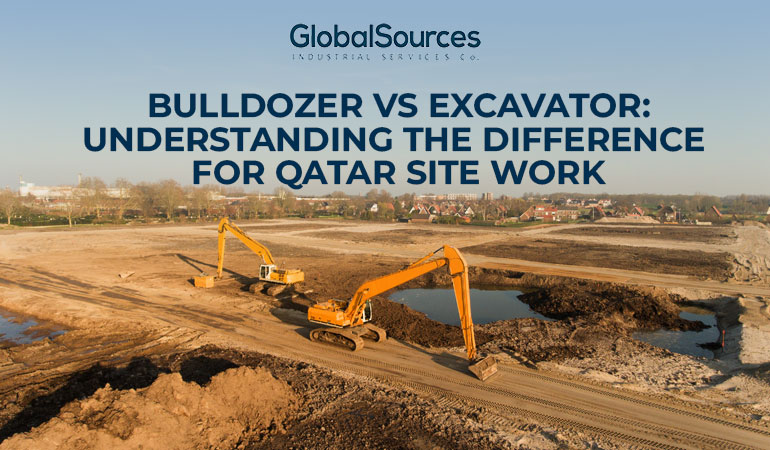
An excavator digs. Its rotating upper body and articulated boom can reach below ground level, dig precise trenches, load material into trucks, and work in a fixed position over a sustained period. It is the right machine for foundation excavation, drainage trenching, pipeline installation, and material loading. Excavators are not suited for bulk pushing or large-area grading.


Direct Comparison

Task Bulldozer Excavator
Large-area site clearing ■ Best choice ■ Too slow
Foundation digging ■ Cannot dig precisely ■ Best choice
Trench excavation ■ Wrong machine ■ Best choice
Loading dump trucks ■ Cannot load trucks ■ Best choice
Rough grading (large area) ■ Best choice ■ Too slow
Backfilling trenches ■ Good choice ■ Also effective
Working in confined spaces ■ Too large ■ Mini or medium excavator


When You Need Both

On large Qatar construction projects — major infrastructure, industrial site development, and large residential schemes — a bulldozer and excavator typically work together. The bulldozer clears and rough-grades the site first. The excavator then follows to dig foundations, trenches, and drainage. Both are essential, but they work in sequence rather than simultaneously on the same task.

SEQUENCING Sequence matters. Mobilise the bulldozer first for site clearing, then bring in excavators for foundation and trench work. Running both simultaneously on the same area creates interference and reduces output from both machines.
Global Sources Qatar provides bulldozers, excavators, and full earthmoving fleets with operators across Qatar construction and industrial projects.
View our full services: globalsources.qa/earth-moving

How to Select the Right Excavator Size for Your Qatar Project

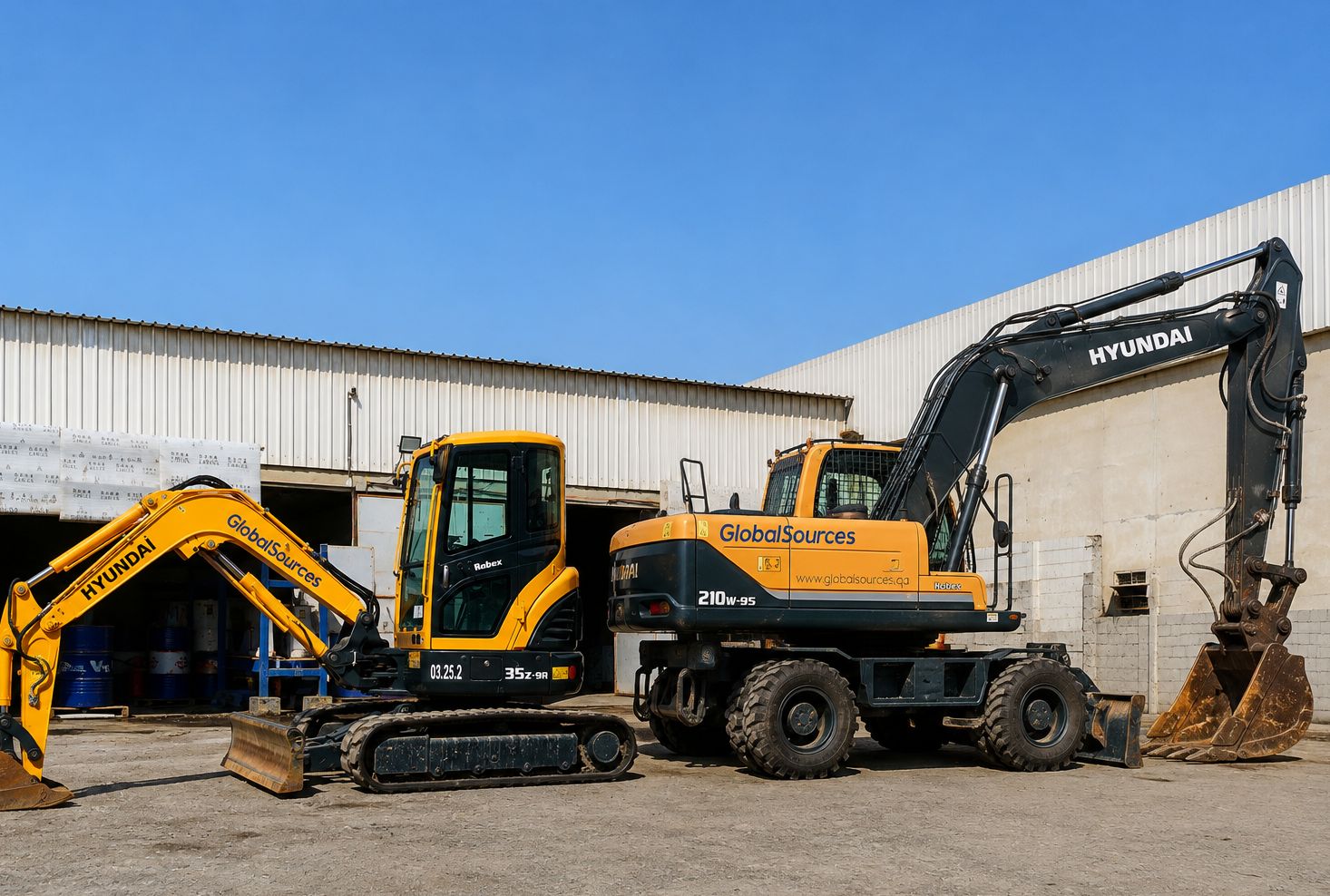
Excavators come in a wide range of sizes — from 1-ton mini machines that fit through a standard doorway to 50-ton heavy excavators that move mountains of material. Choosing the right size for your Qatar project directly affects your productivity, your cost, and in some cases your site safety.

This guide covers the main excavator size categories, what each is best suited for, and how to make the right selection for your specific Qatar site conditions.

“A bigger excavator is not always a better excavator. The right size is the one that fits your trench width, your site access, and your output target.”

Excavator Size Categories and Their Uses

Size Category Operating Weight Dig Depth Best For in Qatar
Mini / Compact 1T – 6T Up to 3m Urban Doha sites, confined access, landscaping, shallow utility trenching
Small 6T – 14T Up to 5m Residential foundations, drainage, smaller infrastructure projects
Medium 14T – 30T Up to 7m Standard foundation and civil works, pipeline, most Qatar construction projects
Large 30T – 50T+ Up to 9m+ Heavy earthworks, deep basements, major infrastructure, oil & gas civil works

The Most Common Excavator Size in Qatar

The 14T–25T medium excavator is by far the most commonly rented excavator size on Qatar construction projects. It handles the majority of foundation, drainage, and civil works tasks efficiently, fits through standard site access gates, and is available from most equipment rental providers.

For projects with narrow trenches or confined site access in Doha’s urban areas, the 6T–10T small excavator is often the right choice despite lower output — because it can physically access areas a medium machine cannot reach.

What to Tell Your Rental Provider

✔ Required dig depth The maximum depth your trench or foundation requires determines minimum bucket arm reach
✔ Site access width Gate width and access route determines maximum machine width
✔ Material type Sand and light soil vs rock or concrete debris affects bucket and machine size selection
✔ Daily output target Cubic metres of material to move per day helps determine machine size and number required
✔ Ground bearing capacity Soft ground may require a machine with lower ground pressure (wider tracks or smaller machine)

GROUND NOTE: Qatar’s sandy soil is generally easy to excavate. But in some areas — particularly near the coast and in older industrial zones — you may encounter rock or contaminated ground that requires specialist buckets or larger machines. Confirm ground conditions before selecting your excavator size.

Global Sources Qatar provides excavators from 1T mini to 50T heavy, with certified operators, across Doha, Ras Laffan, Lusail, Mesaieed, and all Qatar project locations.

View our full services: globalsources.qa/earth-moving

Best Industrial Service Provider in Qatar - Global Sources Doha

Do You Want To Talk With Us? So Don't be Late.

Call Us: +974 4468 5501