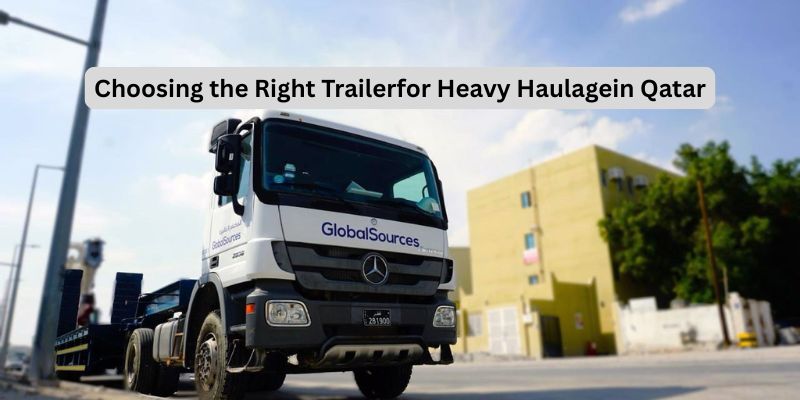
Qatar’s construction and industrial sectors move enormous volumes of equipment and materials between sites every day. The trailer you choose determines whether that movement is safe, legal, and cost-effective — or whether it creates permit problems, load damage, and project delays.
This guide covers the main heavy haulage trailer types used in Qatar, what each one is designed for, and how to select the right one for your specific load.
“The wrong trailer is not just inefficient — it can be illegal, unsafe, and a significant liability on Qatar’s public roads.”
Trailer Types and Their Load Profiles
Trailer Type
Payload Range
Height Profile
Best Load Types in Qatar
Standard Flatbed
Up to 40T
Standard deck (~1.2m)
Steel, pipes, construction materials, palletised goods
Step-Deck / Semi Low Bed
Up to 60T
Lower deck (~0.8m)
Medium-height equipment, industrial units, construction machinery
Low Bed
Up to 100T
Very low deck (~0.4m)
Excavators, bulldozers, cranes, tall heavy machinery
Extendable Low Bed
Up to 100T
Very low deck
Long loads — bridge beams, wind turbine components, long structures
Multi-Axle Trailer
100T – 250T
Low bed with many axles
Very heavy loads — large plant equipment, oil & gas modules
SPMT
Unlimited
Hydraulic adjustable
Largest industrial moves — see SPMT guide
Key Selection Factors
✔ Total load weight Including the machine plus any attachments, rigging, and securing equipment
✔ Load height
The finished height on the trailer must stay within Qatar’s 4.3m road limit
✔ Load length
Loads over 20m typically require a permit and possibly an escort vehicle
✔ Load width
Loads over 2.5m wide require a movement permit. Over 5m may need police escort
✔ Axle weight distribution
Confirm each axle group stays within Qatar’s road axle load limits
Permit Requirements in Qatar
Qatar’s Ministry of Interior regulates all abnormal loads on public roads. Any load that exceeds 48 tons gross vehicle weight, 2.5m width, 4.3m height, or 20m length requires a road movement permit before travel. The permit process involves route survey, load drawings, and in some cases structural assessment of bridges on the route.
For loads to Ras Laffan Industrial City or Mesaieed Industrial City, additional approvals from the industrial city authority are required at the gate. Your transport provider should be familiar with both the road permit process and the specific industrial city access requirements.
PLANNING: Build permit lead time into your project schedule. Standard abnormal load permits in Qatar typically take 3–5 working days. Complex routes with bridge assessments or escort requirements can take longer.
Global Sources Qatar provides flatbed, low bed, multi-axle trailers and SPMT with full permit management and experienced drivers across Qatar.
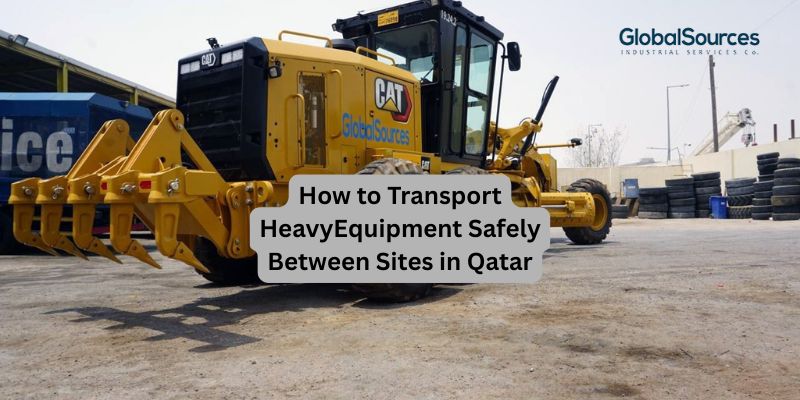
Moving heavy equipment between project sites in Qatar sounds straightforward — until you try to move a 60-ton excavator from Doha to Ras Laffan, or transport a pressure vessel module to Mesaieed Industrial City. The wrong trailer, a missing permit, or a driver without site access credentials can bring your entire operation to a halt.
This guide covers what Qatar contractors and project managers need to know about heavy equipment transport — from choosing the right trailer to navigating Qatar’s road permit process and meeting the specific requirements of oil & gas project sites.
“In Qatar, the transport plan is as important as the lift plan. A delay moving equipment to site costs the same as a delay on site.”
1. Choosing the Right Trailer for Your Equipment
The most common mistake in heavy equipment transport is selecting the wrong trailer type. Each trailer is designed for a specific load profile — getting this wrong risks equipment damage, safety incidents, and permit violations on Qatar’s road network.
Trailer Type
Max Payload
Best For
Common Qatar Use
Standard Flatbed
Up to 40T
Long, flat cargo — steel, pipes, materials
Construction material deliveries across Doha and Lusail
Low Bed Trailer
Up to 100T
Tall or heavy machinery that needs a low deck height
Transporting excavators, cranes, and bulldozers between Qatar sites
Semi Low Bed
Up to 60T
Medium-weight oversized equipment
Construction equipment and industrial units at Mesaieed & Ras Laffan
Multi-Axle Trailer
100T – 250T
Very heavy single loads requiring spread axles
Refinery vessels, transformers, large industrial modules
CRITICAL: A low bed trailer is not always the answer for heavy loads. If your load exceeds 100 tons, a multi-axle trailer configuration is required to spread the weight across more axles and comply with Qatar’s road load limits. Always confirm axle load limits with your transport provider before booking.
2. Qatar Road Permits for Oversized Loads
Any load that exceeds Qatar’s standard road dimensions — generally over 2.5 metres wide, 4.2 metres high, or 20 metres long — requires a road movement permit from the Qatar Ministry of Interior (MOI) before it can travel on public roads.
The permit process involves a route survey to identify low bridges, narrow roads, and utility crossings; a load calculation confirming axle weights within legal limits; and in some cases a police escort for very wide or long loads. Lead times for permits vary — allow 3 to 7 working days minimum for standard oversized loads, and longer for abnormal loads on complex routes.
Step 1: Route Survey Survey the full route from origin to destination. Identify obstacles, low bridges, tight turns, and utility crossings that require clearance.
Step 2: Load Confirm total weight and axle load distribution. Qatar’s axle load limits must not be
Calculationexceeded on any public road.
Step 3: MOI Permit Submit the permit application to Qatar Ministry of Interior with route plan, load drawings,
Applicationand vehicle specifications.
Step 4: Police Escort (if Loads over certain width/length thresholds require police escort during movement. Your
req.)transport provider handles coordination.
Step 5: Time Window Most oversized load movements in Qatar are restricted to specific hours — often night-time or early morning to minimise traffic impact.
3. What Is SPMT and When Is It Used in Qatar?
SPMT stands for Self-Propelled Modular Transporter — a platform vehicle with a large number of independently steered axle lines, capable of carrying virtually any load regardless of weight or size by adding more modules.
In Qatar, SPMTs are used almost exclusively for major oil & gas and industrial projects at Ras Laffan Industrial City and Mesaieed — transporting reactor vessels, heat exchangers, LNG plant modules, and large transformers that no conventional trailer can handle. SPMT moves are complex operations requiring engineering studies, dedicated traffic management, and highly experienced operators.
SPMT NOTE: If your project involves transporting any single item over 200 tons, or a load wider than 6 metres, ask your transport provider specifically about SPMT availability. Not all Qatar transport companies operate SPMTs — confirm capability before committing to a project schedule.
4. Transport Requirements for Ras Laffan & Mesaieed
Transporting equipment to Ras Laffan or Mesaieed is only half the challenge. Getting the equipment into these industrial cities has its own set of requirements that many contractors underestimate.
✔ Gate Access Pass All vehicles entering Ras Laffan Industrial City require a valid gate pass. Drivers must hold a valid Ras Laffan/QatarEnergy contractor card.
✔ Vehicle Inspection Transport vehicles are inspected at the gate for load security, tyre condition, lighting, and load documentation before entry is permitted.
✔ Load Securing Certificate All equipment must be properly secured and a load securing certificate provided.
Unsecured loads are turned away at the gate.
✔ Third-Party Inspection Equipment being delivered to oil & gas sites must carry a current third-party
inspection certificate to be accepted on site.
✔ Night Movement Some movements within Ras Laffan and Mesaieed are restricted to specific time
Restrictionwindows. Coordinate with your site contact in advance.
5. Pre-Booking Checklist — Before You Call a Transport Company
■ Know your equipment Length, width, height, and total weight of the load. Without this, no transport
dimensions and weight company can give you an accurate quote or begin the permit process.
■ Confirm your origin and From which yard or site is the equipment moving? To which gate or delivery point?
destinationBe specific — transport routes in Qatar vary significantly in complexity.
■ Check if a road permit is If your load exceeds standard road dimensions, allow 3–7 days minimum for permit
requiredapproval before your planned movement date.
■ Verify site access For Ras Laffan, Mesaieed, and other restricted sites — confirm what gate pass,
requirementsdriver credentials, and vehicle documentation are required before booking.
■ Confirm transport company Ask specifically whether your transport provider has moved equipment to your
experiencedestination before. Ras Laffan and Mesaieed experience is not universal.
Planning Your Transport Move in Qatar
Heavy equipment transport in Qatar requires the same level of planning as the construction operation itself. The right trailer, the right permits, and a transport partner with genuine Ras Laffan and Mesaieed experience makes the difference between a smooth delivery and a costly delay.
Whether you are moving a single excavator across Doha or transporting oversized industrial modules to Ras Laffan, the key is to plan early, confirm all documentation upfront, and work with a provider who knows Qatar’s roads, permits, and industrial zone requirements inside out.
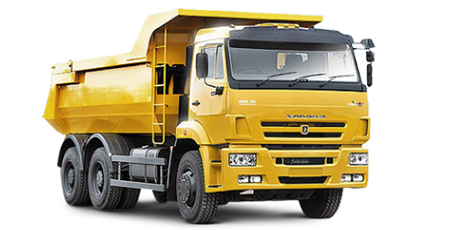
Global Sources Qatar provides low bed trailers, flatbeds, multi-axle trailers, SPMT, dump trucks, and water tankers across Qatar — with experienced drivers, full permit management, and Ras Laffan & Mesaieed access credentials.