PPE Requirements for Oil & Gas and Construction Sites in Qatar
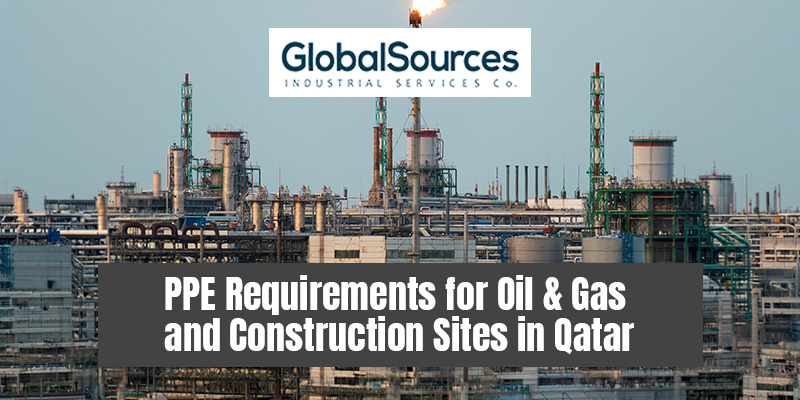
Personal Protective Equipment (PPE) is the last line of defence between a worker and a workplace hazard. In Qatar’s construction and oil and gas sectors — where temperatures can exceed 45°C, fall hazards are constant, and process risks are significant — the right PPE is not optional.
This guide covers the mandatory PPE requirements on Qatar construction and industrial sites, and the additional requirements specific to oil and gas project environments.
| “PPE does not prevent accidents. It prevents accidents from becoming fatalities. The hierarchy of controls must come first — but PPE is always the final layer.” |
Mandatory PPE on All Qatar Construction Sites |
| ✔ Safety helmet (hard hat) | EN 397 or ANSI Z89.1 standard. Mandatory in all areas where there is overhead risk |
| ✔ High-visibility vest | Class 2 minimum on all active construction sites and roadworks |
| ✔ Safety footwear | Steel toe cap boots, EN 20345 or ASTM F2413. No exceptions |
| ✔ Safety glasses / eye protection | Required in all areas where dust, debris, or chemical splash is possible |
| ✔ Gloves | Task-appropriate gloves — cut-resistant for steel work, chemical-resistant for hazardous substances |
| ✔ Hearing protection | Mandatory in areas exceeding 85 dB — generators, compressors, hammer work |
Additional PPE for Qatar Oil & Gas Sites |
| Hazard | Required PPE | Standard |
| Fire and flash fire risk | Flame-resistant (FR) coveralls | EN 11612 or NFPA 2112 |
| Chemical exposure | Chemical-resistant coveralls, face shield, gloves | Site-specific chemical assessment |
| H2S / toxic gas presence | Personal gas detector + SCBA escape set | Mandatory at Ras Laffan and Mesaieed |
| Fall from height | Full body harness + double lanyard | EN 361 / ANSI Z359 |
| Electrical work | Insulating gloves, arc flash protection | IEC 61482 or NFPA 70E |
| Night work | Head torch + high-visibility clothing | Site lighting plan requirement |
Qatar-Specific PPE Considerations |
Qatar’s extreme summer heat (June–September) creates additional PPE challenges. Standard FR coveralls can cause dangerous heat stress when worn in 45°C+ temperatures. Qatar has specific regulations limiting outdoor work during peak summer hours (11:30am–3pm), and employers must provide cooling stations, ample water, and rest periods. For workers required to wear heavy PPE in hot environments, heat stress monitoring is not optional.
All PPE used on QatarEnergy project sites must carry a valid international standard marking (CE, ANSI, or equivalent). PPE without standard certification will be rejected by site HSE inspectors.
| COMPLIANCE | Buy PPE certified to international standards — not just the cheapest option. Qatar’s site HSE teams are trained to inspect PPE certification markings, and rejected PPE creates HSE non-conformance records for your company. |
| Global Sources Qatar supplies certified PPE and industrial safety equipment for construction and oil & gas projects across Qatar. Full range of EN/ANSI certified products available. |
| View our full services: globalsources.qa/safety |
Related service
More guides on this topic